Best Platforms for Remote Work in 2026 (Tested From the Hiring Side, Not Just the Applicant Side)
Chintan Poriya
Lead Career Editor & AI Research Director
Published: February 11, 2026
Table of Contents
We needed a freelance UI designer for a client project with an eight-day turnaround, so we posted the same brief across three different platforms to see what would come back. Sixty-one applications total. Forty of them opened with some version of "I am the best fit for your project" without a single reference to what the project actually was. We hired the one person whose proposal mentioned our client's actual product by name and pointed out a specific usability issue on their current site.
That's the real difference between platforms that work and platforms that just generate volume and it's also the real difference between candidates who get hired and candidates who get scrolled past. Here's what we've actually seen work, having sat on both sides of these platforms hiring through them and, earlier in our own careers, applying through them.
Why Remote Work Isn't Slowing Down
Companies figured out that remote teams can hit the same output as office-based ones, and once that stopped being a question, hiring pools opened up globally. That's true across development, design, marketing, support, writing, and increasingly AI-specific roles. For professionals, it means more employers to reach and, for better or worse, a lot more competition per posting.
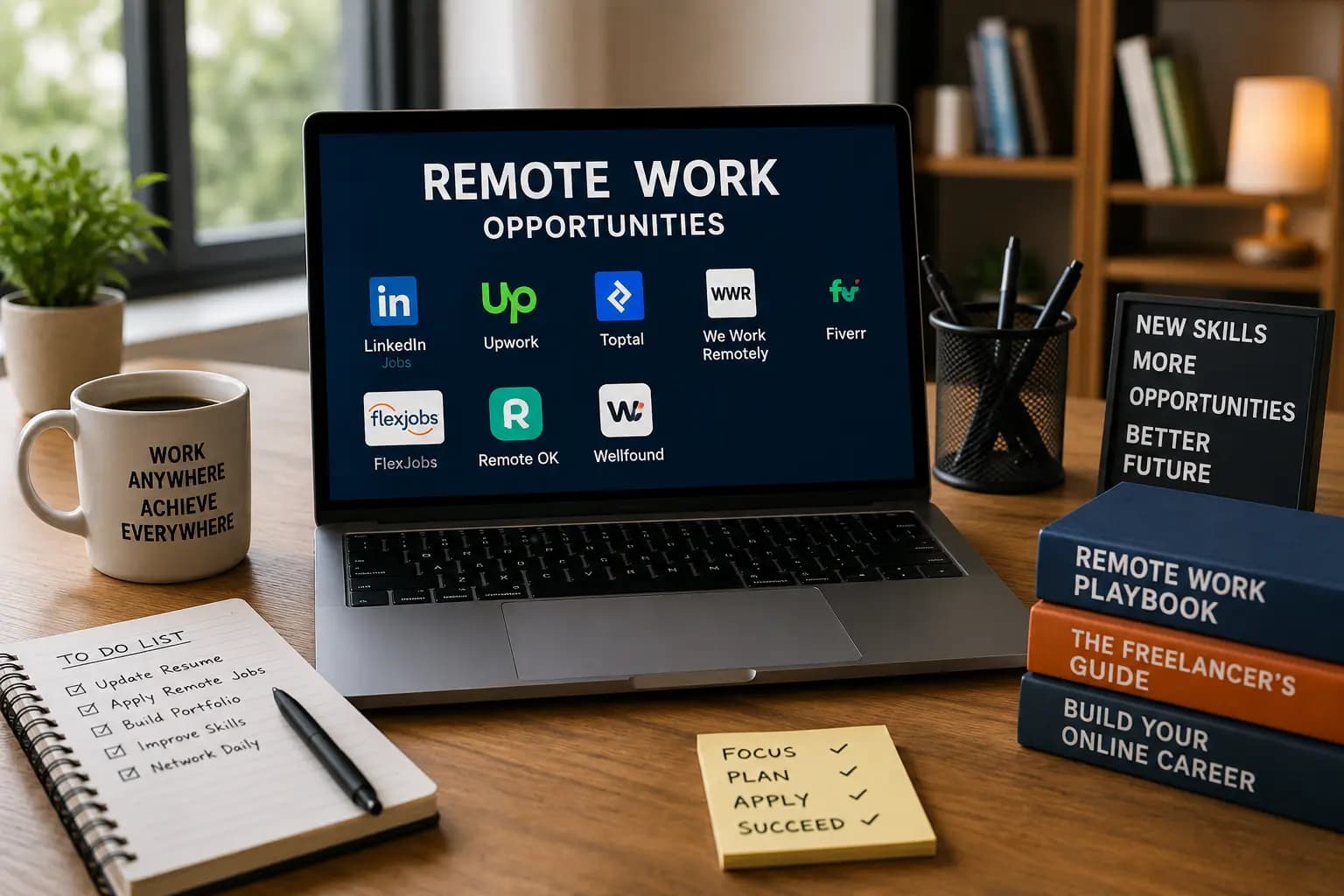
1LinkedIn Jobs
Still the most reliable starting point for verified companies and a straightforward application process. The "Open to Work" setting genuinely does increase inbound recruiter contact we've reached out to candidates directly because of it more than once. Strongest for software engineering, marketing, product, design, and business analyst roles.
2Upwork
The largest general freelance marketplace, and the one where profile quality matters most. We've hired AI/ML freelancers here specifically the ones who stood out had a handful of detailed case studies rather than a long list of vague skills. Best suited to freelancers looking for repeat, longer-term client relationships rather than one-off gigs.
3Fiverr
Package-based instead of proposal-based you list what you offer at a set price instead of bidding per project. Works well for well-defined services: logo design, website builds, SEO, AI automation setup, resume writing, voiceover work. Clear packages with honest pricing consistently outperform vague "I do everything" listings.
4Toptal
Genuinely selective the screening process is real, and it shows in the applicant quality once you're through it. We've looked at Toptal specifically for senior roles: developers, UI/UX, AI specialists. Harder to get into, but the pay reflects that filtering, and clients generally trust it more going in.
5Wellfound (formerly AngelList)
The go-to for startup-specific roles software engineering, product design, data science, AI engineering often with equity attached alongside salary. If you want early-stage company exposure over enterprise stability, this is where that trade-off lives.
6We Work Remotely
Exclusively remote listings, heavy on programming, design, DevOps, customer support, sales, and marketing, mostly from international companies. Clean, no-frills board worth checking regularly rather than relying on it as a one-time search.
7FlexJobs
Every listing gets reviewed before it's published, which cuts down scam and low-quality postings noticeably compared to open boards. It's paid, and for some people that's a dealbreaker, but the listing quality is genuinely higher fewer dead links, fewer ghost postings.
8Freelancer.com
Broad category coverage software development, AI, data entry, graphic design, translation, marketing, content writing. Reputation compounds here more than on most platforms; early reviews matter disproportionately to how much repeat work follows.
9Remote OK
Popular specifically with technical talent development, DevOps, cloud, AI, cybersecurity, product. The filtering by technology, salary range, and location makes it faster to narrow down than boards that dump everything into one feed.
10Contra
No commission fees on what you earn, which is a real difference from platforms that take a cut of every project. Popular with designers, developers, writers, and content creators. A strong, specific portfolio matters more here than a long resume the platform is built around showing work, not listing credentials.
Matching the Platform to the Role
| Role | Platforms Worth Trying |
|---|---|
| Developer | Toptal, Upwork, Wellfound, Remote OK |
| Designer | Fiverr, Upwork, Contra |
| Writer | Upwork, Fiverr, LinkedIn, Freelancer.com |
| AI/ML Engineer | LinkedIn, Toptal, Wellfound, Upwork |
These aren't exclusive lists plenty of good work happens outside them but they're the platforms that consistently surface relevant, current opportunities for each of these paths.
What Actually Gets You Hired Faster
Going back to that design gig: the winning proposal wasn't the longest or the most polished. It was the most specific. A real portfolio with actual results, a summary that says something concrete instead of generic, a proposal customized to what was actually asked for, and a resume or profile kept current that combination beats volume every time we've watched it play out. Testimonials from past clients help too, more than most freelancers expect; we read them before we read anything else on a profile.
What Tanks an Application Before It's Even Read
Mistakes to Avoid
Sending the exact same proposal to every listing
A thin or missing portfolio
Pricing so low it reads as desperate rather than competitive
Overstating skills you can't back up in a follow-up conversation
Going quiet on communication mid-project
Letting your actual skills go stale while you're busy applying
Final Thoughts
The platform matters less than most people assume going in. What actually separates the freelancers and remote hires who build a real career from the ones who burn out after a few months of low-paying gigs is specificity a portfolio that shows real results, proposals written for the actual client in front of them, and consistent follow-through once the work starts.
Pick two or three platforms that fit your actual field from the list above, put real effort into a small number of applications instead of spreading thin across fifty generic ones, and let your track record do the compounding from there.
FAQ
Should I apply to every platform at once, or focus on a few?
Focus on two or three that actually match your field. Spreading across every platform with the same generic profile tends to produce worse results than putting real effort into fewer, better-matched applications.
Is a paid platform like FlexJobs actually worth the subscription?
For some people, yes the pre-screening cuts down significantly on scam and stale listings, which matters most if you're short on time to sift through noise elsewhere.
How important is a portfolio compared to a resume on these platforms?
On freelance-focused platforms like Contra, Fiverr, and Upwork, the portfolio usually gets looked at first and carries more weight. On more traditional platforms like LinkedIn, the resume and profile summary still matter more.
What's the biggest thing that gets an application skipped over?
A generic, unpersonalized proposal. It's the fastest tell that someone didn't actually read the brief, and it's usually the first thing that gets an application passed over on our end.
Written by Chintan Poriya, Marketing Head.
Read More in Freelancing Advice
Freelance Client Onboarding: How to Turn a New Client Into a Smooth Project
One of our early client automation projects started the same day the client said yes, no written scope, just a WhatsApp message confirming "build the lead bot." Three weeks in, we rebuilt two weeks of work for a feature nobody had actually agreed to in writing.
Read article →
The Freelance Offer Reset: How to Sell Business Outcomes When AI Can Do the Basic Work
We used to list one of our own service lines simply as "n8n automation setup." It brought in small, price sensitive inquiries asking us to match a cheaper quote. We rewrote it around a specific outcome instead, and the average deal size roughly tripled.
Read article →