Build a Freelance Portfolio That Wins Clients
Chintan Poriya
Lead Career Editor & AI Research Director
Published: May 13, 2026
Table of Contents
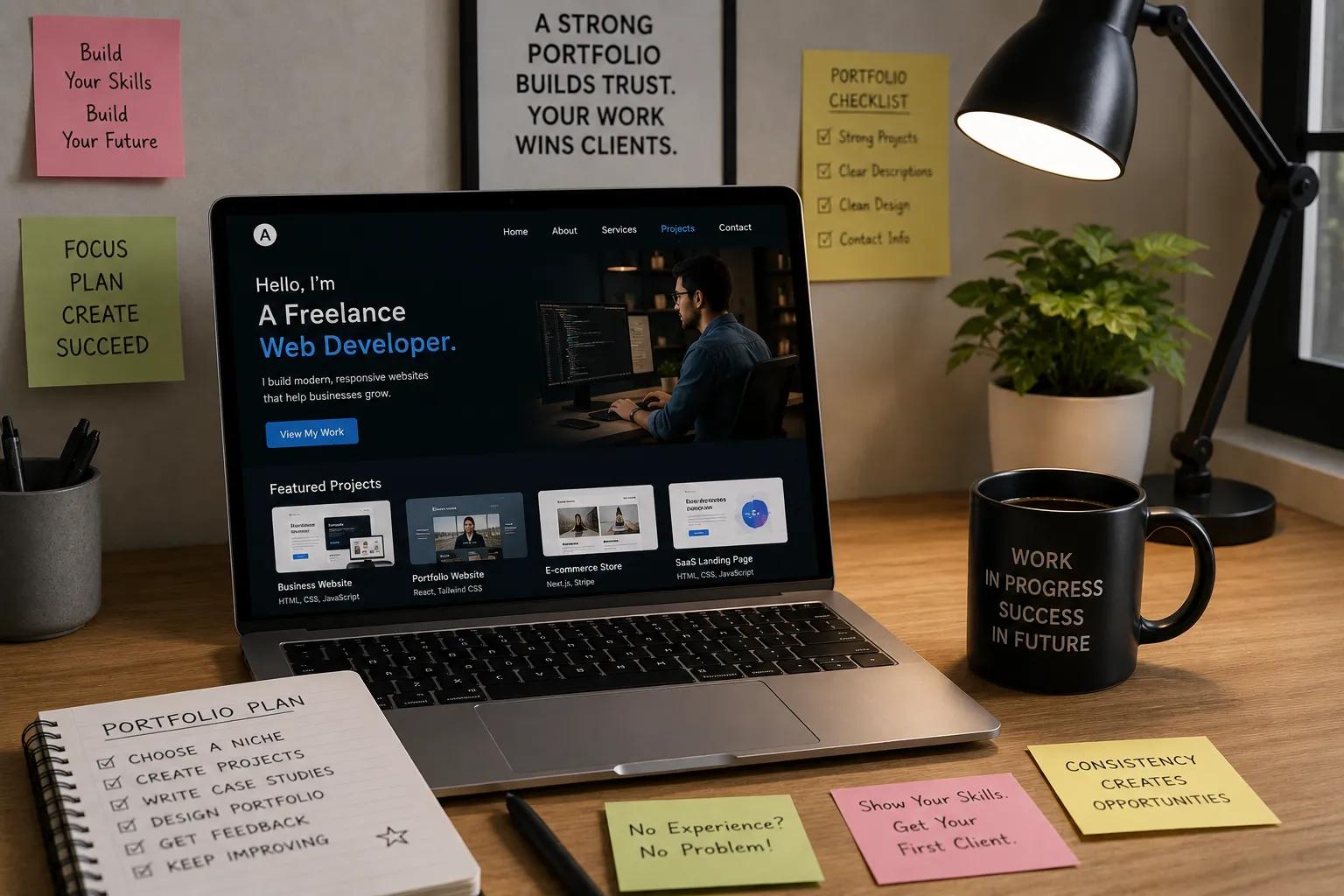
We once picked a freelancer with zero paid client history over three other applicants who each had years of experience listed. Her portfolio had three personal projects: nothing client-paid, all built on her own time, but each one explained the actual problem she was solving, what she tried, and what the outcome looked like. The "experienced" portfolios were screenshot galleries: here's a website, here's a logo, no context, no reasoning, nothing to actually evaluate beyond whether the colors looked nice.
That's the real myth about freelance portfolios: that they're about proving years on the job. They're not. They're about proving you can think through a problem and explain your reasoning clearly enough that a stranger trusts you with theirs.
Why a Portfolio Matters More Than People Think
Before a client ever messages you or books a call, they're looking at your previous work and quietly answering four questions: can this person actually do the job, have they done something like this before, do they seem professional, can I trust them with this. A portfolio that answers those clearly does most of the persuading before the conversation even starts.
You Don't Need Years of Experience: You Need Real Projects
Personal projects, practice assignments, open-source contributions, college work, mock client projects, case studies built entirely on your own: all of it counts, provided it demonstrates real skill and gets explained properly. The freelancer from the opening story didn't have a single paying client behind her three projects. What she had was clear thinking, visible on the page.
Build Projects That Match the Work You Actually Want
Random projects attract random inquiries. Build toward the work you want to be hired for.
For a Web Developer
A business site, a restaurant site, a SaaS landing page, a personal portfolio site, an e-commerce homepage.
For an AI Developer
A resume analyzer, an AI chatbot, a document Q&A tool, a voice assistant, a content generator.
For a Designer
A brand identity package, a mobile app UI, a website redesign, a social campaign mockup.
If you want backend work, build backend projects. If you want AI work, build AI projects. It sounds obvious written out, but a huge share of portfolios we've reviewed are a scattered mix that doesn't point toward any particular hire.
Explain the Problem, Not Just the Result
This is the exact gap between the portfolio we hired and the three we didn't. For every project, walk through what actually needed solving, how you approached it, what tools or frameworks you used, and what the outcome was. Something like: "Built an AI-powered resume analyzer that improved ATS compatibility and generated personalized suggestions within seconds" tells a reader far more in one line than a screenshot ever could. A portfolio full of unexplained screenshots asks the reader to guess at your thinking. A portfolio with real explanations shows it directly.
Keep the Layout Out of the Way of the Work
Clean, predictable sections beat a cluttered, over-designed site nearly every time.
We've clicked away from portfolios where a heavy animation slowed the page enough that we gave up before seeing a single project. The work should be the thing getting noticed, not the transitions around it.
Write Like You Actually Know What You're Talking About
Says almost nothing
Specific and credible
This single shift (vague claim to specific, confident description) does more for how a portfolio reads than any design change.
List the Skills You Can Actually Back Up
Only include what you're genuinely comfortable discussing in a real conversation. A shorter, accurate list reads better than a long one padded with things you've only briefly touched. The padded version tends to get exposed the moment a client asks a follow-up question.
Get Testimonials Wherever They're Genuinely Available
Friends you've done real work for, professors, local businesses, volunteer projects, internship mentors: ask any of them for a short, honest testimonial. Even one specific, genuine recommendation does real work building trust, more than people expect from a single quote.
Don't Make Anyone Hunt for How to Reach You
Email, LinkedIn, GitHub, your portfolio site, WhatsApp if that's how you actually work, a simple contact form. We've genuinely lost track of freelancers we meant to follow up with because their contact information was buried three clicks deep. Make it obvious and immediate.
Mistakes That Undercut an Otherwise Strong Portfolio
Showing work that's clearly unfinished. Padding the page with weak projects instead of trimming to your strongest few. Low-quality, hard-to-read screenshots. A site that breaks or looks off on mobile: worth checking, since a real share of clients will view it on a phone first. Long, dense paragraphs nobody actually reads through. Old completed projects that never got updated to reflect current skill level. And contact information that's genuinely hard to find.
A Quick Portfolio Checklist
Verify before sharing
How Often to Actually Update It
Whenever you finish a new project, pick up a genuinely valuable new skill, earn a certification worth mentioning, get strong client feedback, or improve something already on the page. A portfolio that hasn't changed in a year quietly signals the opposite of what you want it to: that nothing's moved forward recently, whether or not that's actually true.
Final Thoughts
A strong portfolio opens doors long before a long client history ever could, and the freelancer we hired over three more "experienced" applicants proved that directly. What made hers work wasn't polish. It was that every project on the page explained a real problem and a real approach to solving it, which is exactly what a client is actually trying to evaluate when they land on your site.
Build toward the work you actually want. Explain your thinking on every project, not just the outcome. Keep it clean enough that the work stays the focus. And replace practice projects with real client work as it comes in; the portfolio should keep moving, the same way your actual skill does. Start mapping out your path using our guide on how to start freelancing, then learn how to pivot to high-paying freelance clients. Don't forget that falling back to a full-time role might expose you to AI resume mistakes.
FAQ
How many projects should be in a freelance portfolio starting out?
Five to eight strong ones is a solid range. A dozen mediocre projects dilute the impact of your best two or three, so trim rather than pad.
Is it okay to include personal or practice projects if I have zero paid client work?
Yes, and it's often expected for beginners. What matters is the explanation behind each project, not whether a client paid for it.
Should I remove old projects as I get better, or leave the portfolio growing indefinitely?
Remove or update anything that no longer reflects your current skill level. A portfolio should represent your best current work, not a complete archive of everything you've ever built.
Does portfolio design matter as much as the projects themselves?
Less than people assume. A simple, fast, easy-to-navigate layout beats a heavily designed one. The projects and their explanations are doing almost all of the actual persuading.
Written by Chintan Poriya, Marketing Head.
Read More in Freelancing Advice
Freelance Client Onboarding: How to Turn a New Client Into a Smooth Project
One of our early client automation projects started the same day the client said yes, no written scope, just a WhatsApp message confirming "build the lead bot." Three weeks in, we rebuilt two weeks of work for a feature nobody had actually agreed to in writing.
Read article →
The Freelance Offer Reset: How to Sell Business Outcomes When AI Can Do the Basic Work
We used to list one of our own service lines simply as "n8n automation setup." It brought in small, price sensitive inquiries asking us to match a cheaper quote. We rewrote it around a specific outcome instead, and the average deal size roughly tripled.
Read article →