Build Your Personal Brand in 2025: The Career Investment That Pays for Years
Table of Contents
Two developers applied for the same role within a few days of each other last year: same three years of experience, same core stack, nearly identical resumes on paper. One had a GitHub with real, ongoing commit history and a short blog post walking through a specific debugging problem she'd solved. I read that post before I ever opened her resume, and by the time I got to it, I'd already half-decided to bring her in.
The other candidate had nothing findable beyond the resume itself (no GitHub activity, no blog, nothing searchable). We never got to that second interview. Not because the resume was weak. Because there was nothing else to go on, and the first candidate had already made the stronger case before the conversation even started.
That's the actual case for personal branding, and it has nothing to do with becoming influential or chasing followers. It's about being findable and credible before anyone's even talked to you.
What a Personal Brand Actually Is
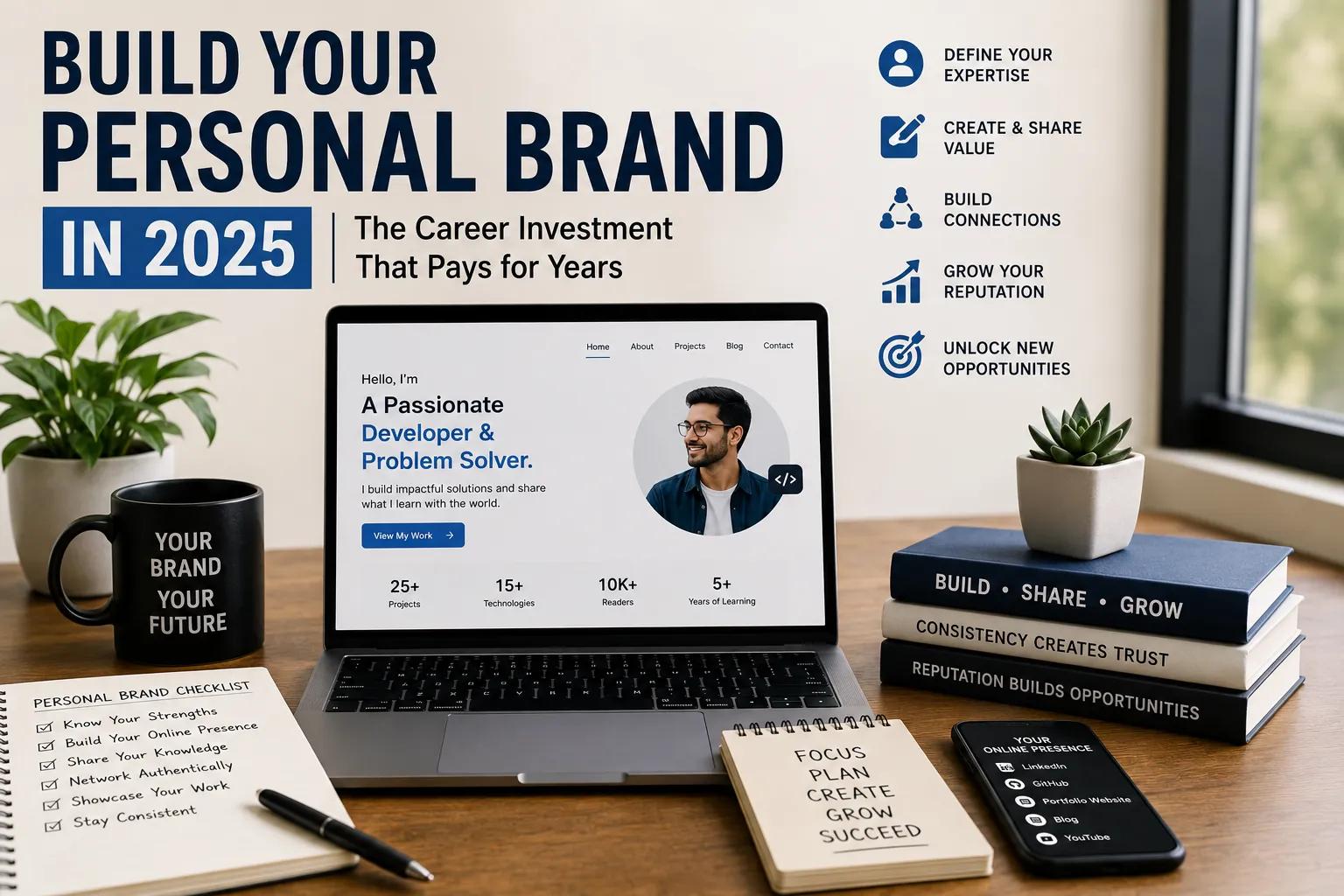
It's how someone describes you when you're not in the room to describe yourself. Your skills and experience matter, but so does your reputation, your visible work, how you communicate, and the value people can actually see you've provided. Every GitHub commit, blog post, portfolio update, and thoughtful comment adds a small piece to that picture, whether you're deliberately building it or not.
Why This Actually Affects Hiring Decisions
Before we schedule most interviews, someone on our end checks LinkedIn, GitHub, a portfolio site if one exists, anything publicly searchable. If there's nothing there beyond the resume, the candidate is exactly one document: nothing more, nothing less. If there's real, visible work, they become memorable before the interview even starts, which is precisely what happened with the candidate from the story above.
Pick One Thing to Be Known For
Trying to be broadly competent at everything tends to make you memorable for nothing specific. Pick a lane (AI and machine learning, Python development, cloud engineering, UI/UX, digital marketing, cybersecurity, data analytics, product management) and let that focus show up consistently across your profile, projects, and posts. The candidate from the opening wasn't a generalist online; her GitHub and blog both circled the same specific area, and that consistency is part of what made her memorable.
Build Something Before You Start Talking About Yourself
Motivational posts with nothing behind them read as empty, and people notice. Build first: an AI resume builder, a personal finance tracker, a weather dashboard, a portfolio site, a chat app, a small e-commerce project, an automation script. Every real project is proof, and proof is what actually gets read before a hiring decision, not a headline claiming expertise. (Avoiding these AI resume mistakes is also essential).
Document What You're Learning, Not Just What You've Mastered
You don't need to be an expert to write something useful. Share lessons from a course, a specific problem you solved and how, a walkthrough of a project, career observations, something you learned about a tool. Teaching reinforces your own understanding, and it's exactly the kind of content that made the debugging blog post from the opening story worth reading before a resume ever got opened.
Keep LinkedIn Actually Current
The Professional Homepage
We check LinkedIn before we open a resume more often than not; it's usually the first click.
Treat it as a real professional homepage, not a static resume upload. If you are completing any certifications, they belong here immediately.
A Simple Portfolio Site Goes a Long Way
It doesn't need to be elaborate. About, skills, projects, resume, a blog if you're writing, and clear contact information. The entire site should answer one question for a stranger in under a minute: why should someone hire this person? If it doesn't answer that quickly, it's not doing its job yet. (Building a freelance portfolio follows the same rules).
Contribute to Open Source, Even in Small Ways
It shows real collaboration, actual code quality under review, genuine problem-solving, and a habit of continuous learning: all things a resume claims and open-source contribution actually demonstrates. Small, consistent contributions carry more weight than one large, one-off project that never gets touched again.
Network Like You Mean It, Not Like You're Collecting Numbers
A large connection count means very little on its own. Real engagement does: thoughtful comments, genuinely helping someone with a problem, being active in a relevant community, showing up to a meetup or hackathon. Relationships built this way tend to produce actual opportunities far more often than a large, mostly-silent network ever does.
Consistency Beats Intensity Here
Personal brand building is slow, and that's fine (it's not supposed to be a sprint). A workable weekly rhythm: one LinkedIn post, one small project improvement, one new concept learned, a handful of genuine new connections, maybe one short piece of writing. Small, repeated actions compound into something real over months, in a way that one big burst of activity followed by silence never does.
Mistakes That Quietly Undermine This
Influence and credibility aren't the same thing, and only one of them shows up in a hiring decision.
A 90-Day Plan to Actually Build This
Month 1
Foundation
Get LinkedIn genuinely current, build a simple portfolio site, and finish one strong flagship project you can point to.
Month 2
Momentum
Publish a handful of LinkedIn posts, write one real technical blog post, and get some real activity going on GitHub.
Month 3
Visibility
Show up to networking events, share project updates, and start applying with a presence that backs up the resume.
By the end of three months, there's a real online presence doing quiet work in the background, whether or not you're actively applying anywhere at that moment.
Final Thoughts
A resume tells someone what you've done. A personal brand shows them how you think and what you're actually capable of beyond a bullet-point list, and it's often the thing that decides which resume gets a second look in the first place. That's not a hypothetical; it's what happened with the two nearly identical applications from the opening of this article, and it plays out the same way more often than most job seekers realize.
Building this doesn't require an expensive course or a large following. It requires consistency, real work you're willing to show, and enough visibility that someone can actually find something beyond a document with your name at the top.
FAQ
Do I need a large following for a personal brand to actually help my career?
No. What matters far more is having real, findable work (a GitHub with genuine activity, a portfolio, a blog post or two) over a large audience with nothing behind it.
How long does it realistically take to build a personal brand that makes a difference?
Around 90 days of consistent effort is enough to have a real, credible presence: not influence-level visibility, but enough that a recruiter finds something substantial when they search your name.
Is a personal website necessary, or is LinkedIn and GitHub enough?
LinkedIn and GitHub alone can work well, especially for technical roles. A simple portfolio site adds real value mainly when it lets you tell a fuller story than either platform allows on its own.
What's the single highest-impact thing to do first if I'm starting from nothing?
Finish one real, complete project and make it genuinely visible: on GitHub, in a short write-up, wherever fits. That single piece of proof does more than a dozen posts with nothing behind them.
Written by Chintan Poriya, Marketing Head.
Read More in Career Advice
The IT Hiring Reset: Why Companies Are Hiring Again, But Only for AI Ready Professionals
We paused hiring for almost eighteen months. When we reopened a role this year, we didn't ask candidates whether they could write clean code. We asked them to walk us through an AI assisted debugging session they had actually done.
Read article →
Upskilling in the AI Era: Why Continuous Learning Is the Career Advantage That Employers Reward in 2026
We gave every team member the same NVIDIA DLI course access and the same AI tool budget a year ago. One built an internal automation tool now running part of onboarding. Another let it sit unused. Here's the actual gap that opened up.
Read article →