Stop Overthinking: How to Take Action and Make Progress Every Day
Chintan Poriya
Lead Career Editor & AI Research Director
Published: May 27, 2026
Table of Contents
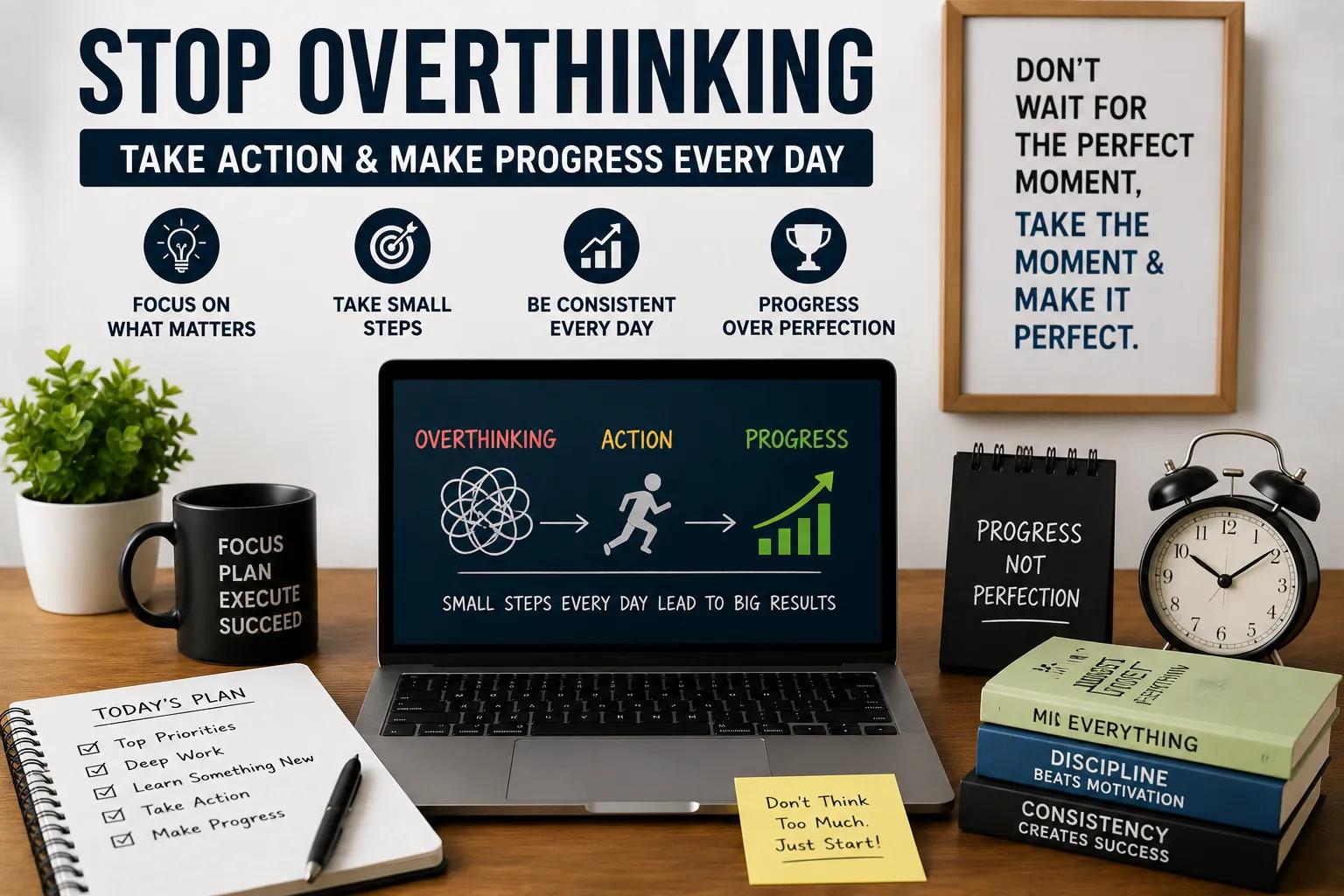
I sat on the idea behind BytezBot for close to four months before writing a single line of code. Reading about frameworks, comparing vector databases, sketching an architecture on paper that felt thorough and careful. Then I actually started building, and the real architecture looked almost nothing like the one I'd planned, not because the planning was wasted exactly, but because half the decisions that felt critical on paper turned out to be irrelevant the moment real data and real constraints showed up.
Four months of careful thinking got replaced by about three weeks of building. That's not a knock on planning entirely. It's the actual lesson: at some point, more research stops adding information and starts becoming a way to avoid the discomfort of starting something you might get wrong.
Why We Overthink in the First Place
It rarely comes from laziness. Usually it's fear of failing, fear of being judged for the result, low confidence in the first attempt, comparing your unfinished work to someone else's finished product, or just wanting the first version to be right instead of accepting it'll need revision. All of this feels productive (you're clearly thinking hard, clearly being careful), but none of it produces anything until the thinking turns into action.
Progress Beats a Perfect Plan
You can't learn to ride a bike by watching more tutorials. At some point the tutorials stop teaching you anything new and the only way forward is getting on and falling over a few times. The same is true for learning to code, starting freelancing, building something real, launching a business: the useful information starts showing up once you're actually doing it, not before.
Break the Big Goal Into Something You Can Start Today
"Become an AI engineer" is too large to act on directly; it's a destination, not a task. "Watch one lesson today. Write one small program. Build one small project this week." Those are actionable, and they're what "become an AI engineer" is actually made of, one small piece at a time. The BytezBot rebuild only moved once I stopped planning the whole system and started with one small, working piece.
Stop Comparing Your Rough Draft to Someone Else's Finished Product
What you see on social media is the finished version: the successful freelancer's portfolio, the startup founder's product, the confident post about a launch. What you don't see is the earlier version that barely worked, the client who ghosted, the three failed attempts before the one that stuck. Comparing your day-one attempt to someone else's year-three result isn't a fair comparison, and it's one of the more reliable ways to talk yourself out of starting at all.
Build a Daily Habit Instead of Waiting for Motivation
Motivation is unreliable. Consistency isn't dependent on it the same way. Even one focused hour a day, used deliberately, compounds faster than people expect: plan the top three priorities in the morning, protect real focused time for the most important one, review honestly in the evening and set tomorrow's plan before closing the day. The daily habit is what actually moves the goal, not the occasional burst of motivated energy that shows up once a month and disappears just as fast.
Confidence Comes After Action, Not Before It
Nobody walks into their first interview, first freelance project, first client call, or first real presentation feeling fully ready. The readiness shows up afterward, built from having actually done the thing once and survived it. Waiting to feel confident before starting is waiting for something that action is what actually produces.
Build Something Instead of Consuming More Information
A portfolio site. A small AI chatbot. A personal blog. A basic mobile app. A design project. A mock marketing campaign. Every one of these teaches something no course covers, because courses are built around the clean, idealized version of a problem, and real projects are built around the messy actual version, which is exactly where the BytezBot rebuild diverged from my original plan. (See how AI agents are built in practice for more context).
Remove What's Actually Stopping You From Starting
Notifications off. Real, dedicated hours set aside. Phone out of reach during that time. Short, genuinely distraction-free sessions rather than a long unfocused stretch. No multitasking pretending to be productive. Protecting attention this deliberately is one of the simplest, least glamorous ways to actually make consistent progress instead of just feeling busy around the edges of it. Good productivity habits form the foundation here.
Notice the Small Wins, Not Just the Big Ones
The Real Milestones
They don't feel like "real" achievements yet, but they are.
These get skipped over because they don't feel like "real" achievements yet, but they're the actual evidence that the pattern is working, and noticing them is what keeps the momentum going long enough to reach the bigger goal they're building toward.
What Actually Keeps People Stuck
That last point is exactly the trap those four months of BytezBot research nearly became.
A 30-Day Challenge If You're Genuinely Stuck
Week 1
Start Daily
Pick one goal and give it 30 real minutes daily. Not planning time: actual work on the thing.
Week 2
Finish Small
Finish one small project inside that goal. Small enough to actually complete within the week.
Week 3
Go Public
Share what you built somewhere real: a community, a friend, a small public post. Visibility creates accountability.
Week 4
Review & Reset
Review honestly what moved and what didn't, then set a slightly bigger goal for the month ahead.
Thirty days of this tends to produce more real confidence than months of research and planning ever did. That's not a guess, it's roughly the gap between my four months of BytezBot planning and the three weeks of actual building that followed it.
Final Thoughts
Success rarely comes from one perfect decision made after months of careful research. It comes from small, repeated action, most of it imperfect the first time through. Every person who's built something real started before they felt fully ready, made mistakes early, and kept going anyway. That's not a consolation story, it's genuinely how most real progress happens, including the version of BytezBot that eventually shipped.
Take one small action today. Write the first line of code, send the first proposal, publish the first post, apply for the thing you've been circling for weeks. One action alone won't change much. Repeating it daily, over weeks, reliably does.
FAQ
How do I know if I'm doing useful research or just avoiding starting?
If the same research keeps circling the same questions without new information showing up, that's usually avoidance. Useful research produces new, specific decisions you couldn't have made before it. If it's not doing that anymore, it's time to start.
What if I start and the first attempt is genuinely bad?
That's expected, not a sign you shouldn't have started. The BytezBot rebuild diverged completely from the original plan. That divergence was the actual learning, not a failure of the planning phase.
How much daily time is actually needed to make real progress on a goal?
Even 30 focused minutes daily, done consistently, outperforms an occasional multi-hour session. Consistency compounds in a way that sporadic effort doesn't.
Is it possible to overthink less without swinging to acting recklessly?
Yes. The goal isn't zero planning, it's recognizing when planning has stopped producing new decisions and started functioning as a way to delay starting. A small amount of upfront thought is useful; endless research past that point usually isn't.
Written by Chintan Poriya, Marketing Head.
Read More in Productivity
The Productivity Myth: Why Busy People Aren't Always the Most Productive in 2026
One developer answered over a hundred Slack messages and sat through six meetings in a single week. Another blocked three hours each morning and finished the sprint's core deliverable two days early. Guess who got the bigger project next.
Read article →
The Productivity Trap: Why Busy Isn't Getting Things Done
I counted 47 Slack notifications during a 3-hour coding block. By my math, two hours went to recovering focus. Here's what actually fixed it.
Read article →